
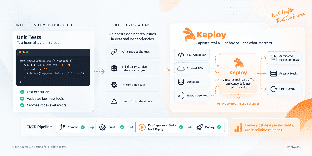
SAN FRANCISCO, California, Sep. 23, 2026: Keploy started seeing a consistent pattern across API-driven teams: unit suites green across the board, regression still shipping. Not because the unit tests were wrong, but because the failures weren't happening inside individual functions. They were happening at the API boundary, in the integration paths and request structures that unit tests never reach.
Running a unit test against an authentication function tells you the function works. It doesn't tell you what happens when the token format changes and the consuming service sends the old structure. It doesn't catch the regression when a response field gets renamed two versions later. Those failures land somewhere, and for most teams that somewhere is production or a downstream service that breaks quietly.
The World Quality Report 2025 puts test suite maintenance at 30 to 40 percent of QA capacity in high-change environments. A significant portion of that effort goes into keeping unit-level regression suites current. None of it adds API-level regression coverage.
The Boundary Testing Gap
Regressions that cross service boundaries are the most expensive category to catch late. A schema change on one endpoint breaks a consumer service three teams over, and nobody finds out until a staging deployment fails or a user reports unexpected behavior. The debugging starts without the context of the original change because enough time has passed since the deploy.
Contract testing addresses part of this. It runs per-service, catches schema drift that end-to-end tests catch slowly, and fits inside a CI pipeline without significant overhead. But most teams haven't built contract test coverage either, which means the boundary regression gap is open on both sides.
The assumption that unit test coverage equals regression testing coverage held up better in monolith architectures, where a function's behavior and the application's observable behavior were closer to the same thing. In API-driven systems with distributed consumers and independently deployed services, that assumption breaks down. The layer where most regressions actually occur is the layer most unit suites don't reach.
During development, Keploy records actual API calls and database interactions and converts those recordings into a regression test suite that runs against the endpoint directly. Response structure changes, status code shifts, and integration path failures get caught there, before they reach a consumer service or a production environment. The coverage comes from what the system does under real request conditions rather than what a developer expected it to do when writing tests against mocked internals.
That difference is what separates regression suites that catch boundary failures from ones that don't.


